Beneath the turquoise domes of Samarkand, where the desert wind carries whispers of camel caravans past, Uzbekistan emerges as a golden page torn from a medieval storybook. This Central Asian jewel preserves the soul of the Silk Road in its sun-baked bricks and azure mosaics, offering modern travelers a portal into an age when this land was the crossroads of civilization.
Architectural Poetry in Ceramic Blue
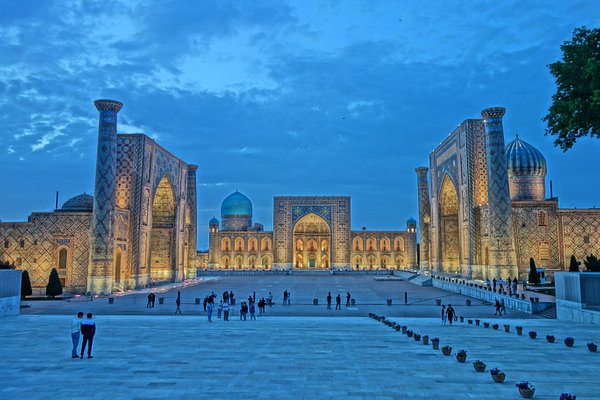
The Registan Square stands as the crown jewel of Islamic architecture, its three madrasahs adorned with celestial patterns of lapis lazuli and gold. At dawn, when the first light kisses the tilde-carved portals, one can almost hear the echoes of scholars debating mathematics and astronomy in these very courtyards eight centuries ago. Nearby, the Shah-i-Zinda necropolis unfolds like a necklace of blue-tiled mausoleums, each more intricate than the last, descending the hillside in a shimmering cascade of Persian calligraphy and geometric perfection.
Desert Kingdoms and Oasis Cities
Beyond Samarkand’s splendor lies Bukhara, its labyrinthine alleys preserving the atmosphere of a medieval trading hub. The Kalyan Minaret, known as the “Tower of Death” for its grim history, has watched over the city since the 12th century, while the covered bazaars still brim with hand-woven suzanis and pyramids of aromatic spices. In Khiva, an entire walled city rises from the Kyzylkum Desert like a mirage, its mud-brick fortifications protecting ornate wooden columns and secret inner courtyards unchanged since the days when it was a notorious slave market.
The Rhythm of Caravan Routes
The spirit of the Silk Road lives in Uzbekistan’s traditions. In remote villages, masters still practice the ancient art of paper-making from mulberry bark, just as their ancestors did when Samarkand supplied the Islamic world with parchment. At Chorsu Bazaar in Tashkent, the morning air fills with the scent of fresh tandoor bread as vendors arrange mountains of ruby-hued pomegranates and golden melons – the same fruits that tempted weary travelers centuries ago. Evening brings the hypnotic rhythm of doira drums as dancers spin in kaleidoscopic silk robes during timeless folk performances.
A Feast Fit for Khans
Uzbek cuisine tells its own story of the Silk Road. Plov, the national dish of rice simmered with lamb and carrots in massive cast-iron kazans, varies subtly from region to region – each city proud of its signature version. Freshly baked non bread, imprinted with elaborate patterns, accompanies every meal, while samsa pastries stuffed with pumpkin or mutton emerge fragrant from clay ovens. In shaded chaikhanas, elderly men sip green tea from porcelain bowls, just as Marco Polo might have done when these routes connected Beijing to Venice.
The Warmth of Desert Hospitality
More precious than any monument is the legendary Uzbek hospitality. A chance conversation in the market may lead to an invitation for homemade halva, while guesthouse hosts treat visitors like long-lost relatives. The tradition of “mehmondo’stlik” (guest-friendship) runs deep here, ensuring that every traveler departs with not just photographs of stunning architecture, but memories of shared laughter over endless pots of tea.
Uzbekistan doesn’t simply display its history – it lives it. From the call to prayer echoing across Registan Square to the scent of saffron drifting through bazaars, this land makes the Silk Road’s golden age feel not like a distant memory, but a vibrant present waiting to be discovered. The caravans may be gone, but their legacy shines brighter than ever in the golden light of a Samarkand sunset.